
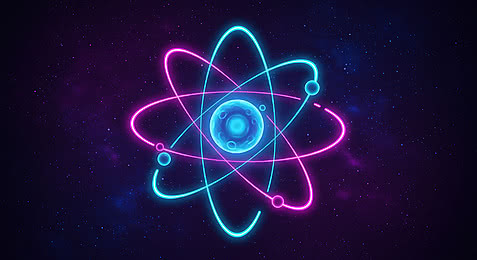
What Is an Atom? A Simple Look at the Tiny Building Blocks of Everything
Atom : Have you ever wondered what everything around you is actually made of? Your phone, the water you drink, the air you breathe, and even your own body are all made up of incredibly tiny particles called atoms.
You cannot see an atom with your eyes, but these tiny building blocks are responsible for almost everything we see and experience in the world.
What Is an Atom?
An atom is the smallest unit of an element that still has the properties of that element. For example, a piece of gold is made of countless gold atoms, while oxygen gas contains oxygen atoms.
Atoms are unbelievably small. In fact, you could fit millions of them across the width of a single human hair. Despite being so tiny, an atom has an interesting structure.
What Is an Atom Made Of?
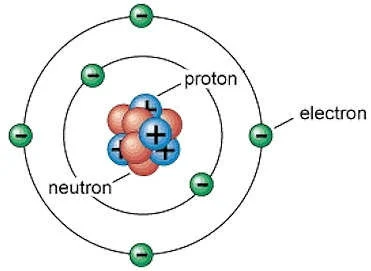
An atom has three main types of particles: protons, neutrons, and electrons.
Protons and neutrons stay together in the center of the atom, which is called the nucleus. Protons have a positive charge, while neutrons have no electrical charge.
Electrons are negatively charged and move around the nucleus. They occupy different energy levels around the center. The way these electrons are arranged plays an important role in how atoms react and connect with one another.
How Do Atoms Create Different Elements?
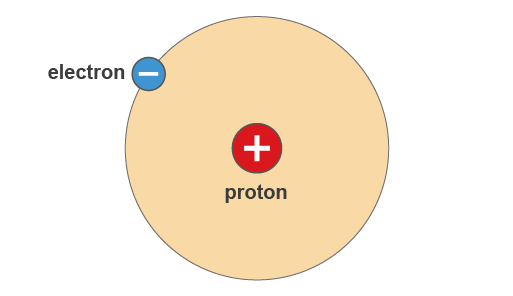
One of the simplest ways to understand atoms is by looking at their protons. The number of protons inside an atom determines which element it represents.
Hydrogen, for instance, has just one proton. Carbon has six, while oxygen has eight. This difference gives each element its own unique characteristics.
Atoms can also join together to create molecules and compounds. A familiar example is water. Each water molecule contains two hydrogen atoms and one oxygen atom.
Why Are Atoms So Important?
Atoms are more than just a science lesson from school. They are involved in almost every part of our everyday lives.
The food we eat, the medicines we take, the materials used to build houses, and the technology inside our smartphones all depend on how atoms behave and interact.
Learning about atoms also helps scientists understand chemistry, physics, biology, medicine, and many modern technologies.
Final Thoughts
Atoms may be too small for us to see, but they are the foundation of the world around us. Once you understand the basic idea of an atom, it becomes much easier to understand how different materials are created and why they behave differently.
In a way, atoms are the tiny building blocks behind the entire physical world.


[…] a subatomic particle that carries a negative electric charge. It is found around the nucleus of an atom, while protons and neutrons are located inside the […]
[…] are more complex than they might first appear. They are made up of smaller particles called quarks. Each […]
[…] is far from static; it is constantly changing and reshaping itself. Deep beneath the surface, tectonic plates move continuously, building […]