Proton Explained: What Is a Proton and Why Is It Important?
Everything around us is made of matter, and matter is made up of atoms. But have you ever wondered what is actually inside an atom? One of the key particles inside an atom is the proton. It is incredibly small, but it plays a huge role in determining what an atom is.
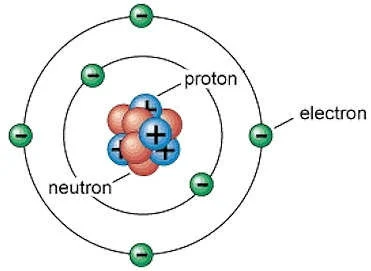
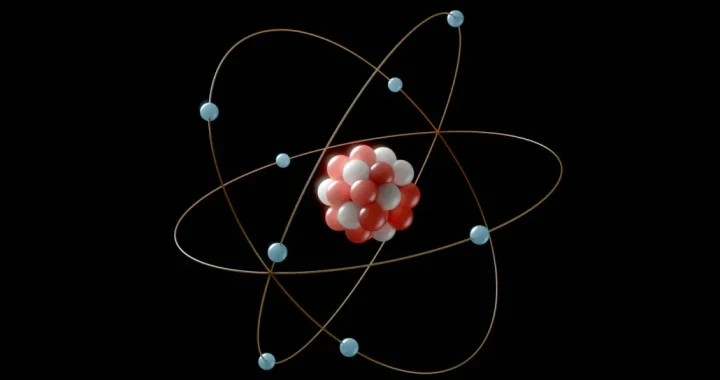
In simple terms, a proton is a positively charged subatomic particle found in the center of an atom. Together with neutrons, protons form the atom’s nucleus. Electrons, which have a negative charge, move around this nucleus.
What Is a Proton?
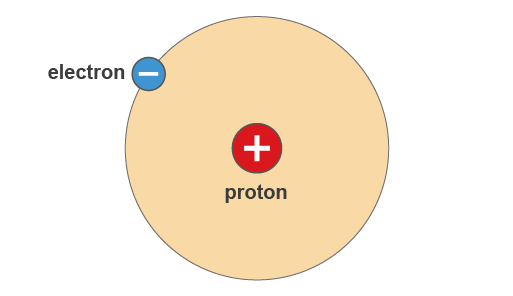
A proton is a subatomic particle with a positive electric charge. Its charge is commonly represented as +1. The number of protons inside an atom tells us which element that atom belongs to.
For example, a hydrogen atom has just one proton. Helium has two, while carbon has six. Oxygen has eight. This number is called the atomic number. If an atom gains or loses electrons, it may become an ion, but changing its number of protons means it becomes a different element.
What Is a Proton Made Of?
Protons are more complex than they might first appear. They are made up of smaller particles called quarks. Each proton contains two up quarks and one down quark.
These quarks are held together by the strong nuclear force. Another type of particle called a gluon helps carry this force between the quarks. Scientists study these interactions to better understand how matter works at its most basic level.
Why Are Protons Important?
Protons are important because they give each element its identity. Without the number of protons, we wouldn’t have the organized periodic table that we use to understand chemistry today.
Protons also play an important role in nuclear science. Nuclear reactions can involve changes in atomic nuclei and can release enormous amounts of energy. This principle is used in areas such as nuclear power and scientific research.
Protons in Everyday Life
You can’t see a proton with your eyes, but they are everywhere. The water you drink, the air you breathe, your phone, and even your own body are all made of atoms containing protons.
Protons are also useful in modern technology and medicine. For example, proton therapy uses high-energy proton beams to target certain tumors with great precision.
Final Thoughts
The proton may be tiny, but it is one of the building blocks that helps make up the world around us. Its positive charge and number inside an atom determine the identity of an element. Learning about protons is a great first step toward understanding atoms, chemistry, physics, and the fascinating structure of matter.