How AI Is Quietly Reshaping the Factory Floor
Not too long ago, artificial intelligence in heavy industry felt like a distant promise. Today, it is quietly running the show. Across manufacturing plants and logistics hubs worldwide, AI is transforming the industrial sector from top to bottom—making operations safer, faster, and remarkably efficient.
It isn’t about sci-fi robots taking over; it’s about using smart data to solve real, everyday operational headaches. Here is how that transformation is actually happening.
Artificial Intelligence: Stopping Machine Breakdowns Before They Happen
Ask any plant manager about their worst nightmare, and they will tell you it’s unplanned downtime. A single broken gear can stall an entire assembly line, costing thousands of dollars every minute.
That’s where predictive maintenance comes in. By attaching smart sensors to machinery, AI constantly listens to the equipment—tracking tiny vibrations, temperature spikes, and unusual sounds. Instead of waiting for a machine to break or servicing it on a rigid schedule, maintenance teams get an automatic heads-up weeks before a part fails. Repairs happen on their terms, not during peak production.
Artificial Intelligence: Catching Flaws Humans Miss
Quality control used to rely on visual spot-checks—a monotonous task where fatigue naturally leads to missed defects.
Modern production lines now use AI-powered vision systems. High-speed cameras scan products as they fly past, spotting hair-thin cracks, color mismatches, or microscopic flaws in milliseconds. By catching mistakes immediately, plants waste far fewer raw materials and stop defective products long before they reach customers.
Navigating Supply Chain Chaos
If recent years have taught us anything, it’s that supply chains are fragile. AI brings much-needed clarity to the chaos.
Smart algorithms process massive amounts of information—from changing consumer trends and shipping delays to weather forecasts—to predict demand with surprising accuracy. Factory leaders can adjust raw material orders dynamically, preventing stock shortages without tying up cash in excess inventory.
The Shift Toward Human-AI Collaboration
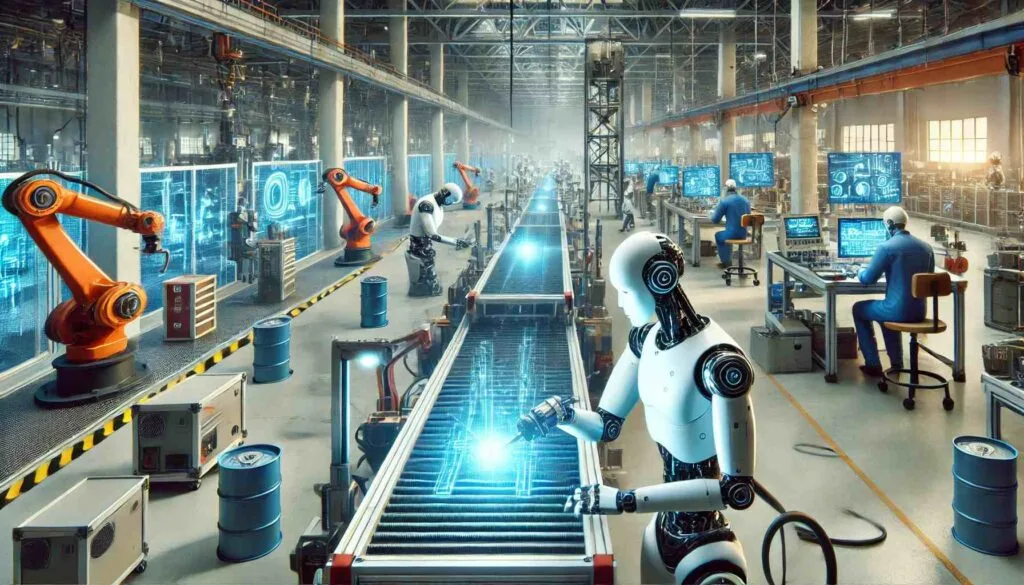
The real win isn’t replacing human workers; it’s protecting them. Cobots (collaborative robots) handle the dangerous, heavy, and repetitive tasks, leaving technicians free to focus on maintenance strategy and complex problem-solving.
Ultimately, AI is no longer a luxury upgrade for industrial leaders. It is becoming the core engine of modern manufacturing—helping companies stay resilient, safe, and competitive in a fast-moving world.